


When you hear the word search engine, you probably think of Google, right? Fair enough, it dominates most of the world.
But if you travel to Russia or a few nearby countries, you’ll notice something different: people don’t “Google” things, they “Yandex” them.
Yandex is Russia’s homegrown tech powerhouse. It’s not just a search engine; it’s a full-blown ecosystem, with maps, email, cloud storage, a taxi app, and even its own AI tools. Think of it as a blend of Google, Uber, and Amazon rolled into one.
In this post, we’ll break down what Yandex is, how it works, why it’s so popular, and what makes it different from Google, all in plain English.
Table of Contents
What Exactly Is Yandex?
Yandex is a Russian multinational company that builds internet-related products and services. At its heart is the Yandex Search Engine, which helps people find websites, images, and information, just like Google does.
The company’s name actually comes from “Yet Another Indexer,” a geeky nod to its early days in web indexing.
But over time, Yandex has evolved into something much bigger. Today, it offers:
- Yandex Search – the main search engine
- Yandex.Maps – navigation and traffic data
- Yandex.Mail – free email service
- Yandex.Disk – cloud storage
- Yandex.Direct – online advertising platform
- Yandex.Taxi (Yango) – ride-hailing and delivery
- Yandex.Market – online shopping and product comparison
If you live in Russia, you could easily spend your whole digital day using Yandex services, from checking emails to ordering food or hailing a cab.
Story Behind Yandex
The Yandex story starts back in the 1990s, when two computer scientists, Arkady Volozh and Ilya Segalovich, began experimenting with ways to index Russian text on the web.
In 1997, they launched the first version of Yandex.ru, designed to understand the complexities of the Russian language, which Google wasn’t great at handling at the time.
Over the years, Yandex grew from a tiny startup to a billion-dollar tech empire. Some big milestones:
- 2000s: Added Yandex.Mail, Maps, and News
- 2011: Went public on NASDAQ, raising over $1.3 billion
- 2017: Partnered with Uber to launch Yandex.Taxi
- 2020s: Expanded globally under the Yango brand
Today, Yandex is one of Russia’s most recognizable brands and holds a massive chunk of the local search market, often more than 60%.
How Does Yandex Work?
Like Google, Yandex uses complex algorithms to crawl, index, and rank web pages.
But there’s one big twist: Yandex’s algorithms are deeply tuned to Russian language patterns and local search behavior.
Here’s what happens behind the scenes:
- Crawling: Yandex bots scan websites and collect pages.
- Indexing: Those pages are stored and analyzed for content, keywords, and relevance.
- Ranking: When someone searches, Yandex sorts results using hundreds of factors, like backlinks, content quality, and location.
- Personalization: Yandex learns from user behavior to deliver more relevant results over time.
It also uses AI and machine learning (mainly through its technology called MatrixNet) to improve search accuracy.
If you’re running a business in Russia, optimizing for Yandex is just as important as optimizing for Google, maybe even more so.
Yandex Ecosystem
Yandex has built a mini-universe of tools and apps. Let’s take a quick tour:
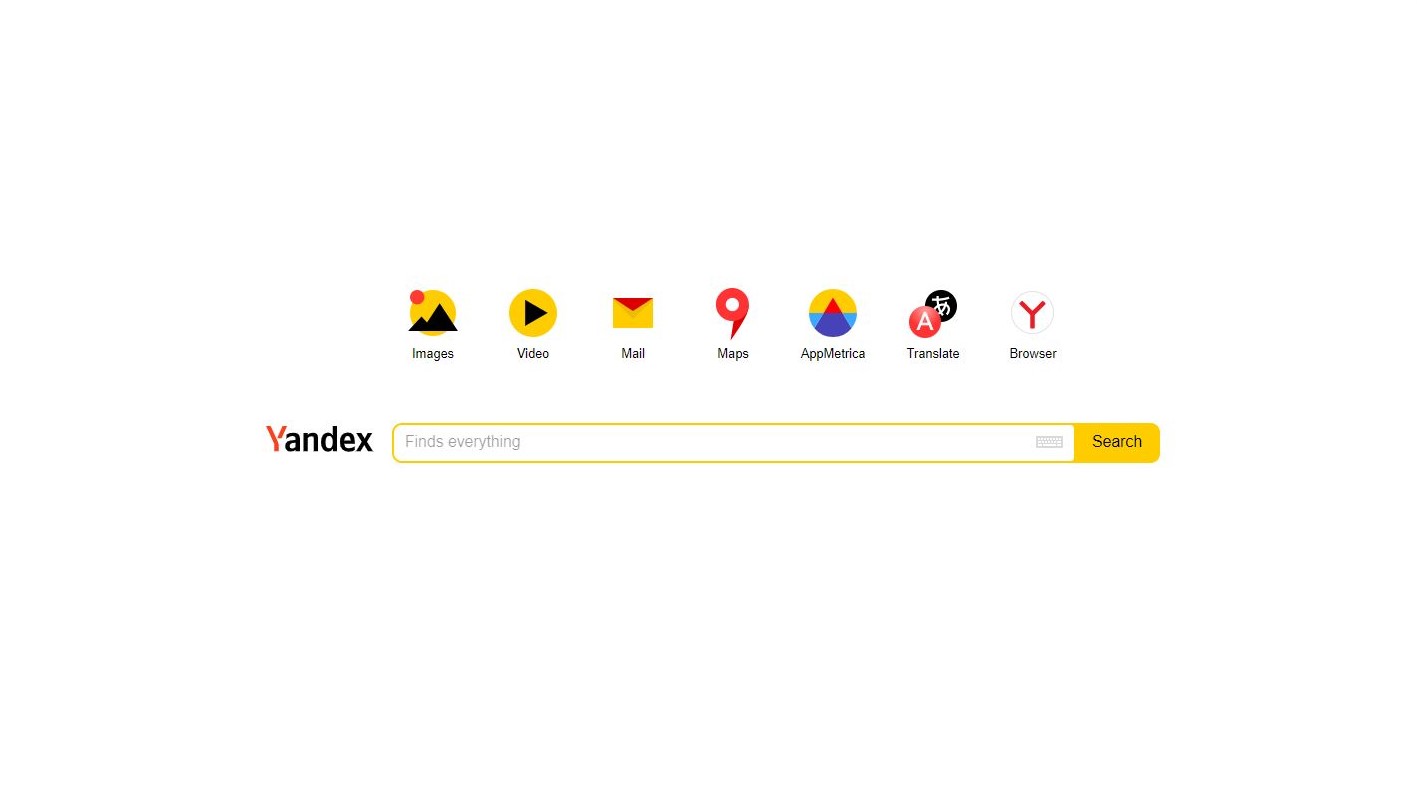
Yandex Search
The core product, used by millions every day. It’s fast, accurate, and understands Russian grammar, slang, and even humor better than any other search engine.
Yandex.Direct
This is Yandex’s version of Google Ads. It lets businesses run targeted ad campaigns across Russia and the CIS region. It’s great for local SEO and often cheaper than Google Ads.
Yandex.Maps & Yandex.Navigator
Maps, live traffic updates, and GPS navigation. It’s extremely popular among drivers in Russian cities.
Yandex.Mail
A free, reliable email service that looks a lot like Gmail, complete with filters, folders, and spam protection.
:max_bytes(150000):strip_icc()/001_yandex-mail-review-1170798-0798cd9348a246d291d5e14d4aad62fd.jpg)
Yandex.Disk
A cloud storage service where users can upload photos, videos, and documents, similar to Google Drive or Dropbox.
Yandex.Metrica
Yandex’s version of Google Analytics. It tracks user behavior, clicks, and heatmaps, and even lets you replay user sessions.
Yandex.Taxi / Yango
This ride-hailing app competes directly with Uber and now operates in more than a dozen countries worldwide.
Yandex vs Google: What’s the Difference?
At first glance, Yandex and Google look similar. But when you dig deeper, there are clear differences:
| Feature | Yandex | |
|---|---|---|
| Main Market | Russia & CIS countries | Global |
| Language Optimization | Russian-first | Multilingual |
| Local SEO Importance | Very high | High but broader |
| Ad Platform | Yandex.Direct | Google Ads |
| Ranking Speed | Slightly slower | Faster |
| Preferred Domains | Local .ru, .by, .kz | Global TLDs |
| Data Storage Laws | Data stays in Russia | Global distribution |
In short, Google rules the world, but Yandex rules Russia.
If your business targets Russian audiences, focusing on Yandex SEO makes much more sense because it rewards local relevance, accurate Russian writing, and region-specific backlinks.
Why Marketers Should Care About Yandex
If you’re running digital campaigns in Eastern Europe, ignoring Yandex would be a big mistake. Here’s why:
- It’s the #1 search engine in Russia.
Over 60% of searches happen here, not on Google. - Yandex ads can be cheaper.
CPC (cost per click) is often lower than Google’s. - It’s great for local targeting.
Yandex loves businesses with local addresses and Russian-language content. - Analytics are next-level.
Yandex.Metrica gives you heatmaps, session recordings, and behavior tracking, all free.
For brands entering the Russian market, Yandex SEO + Yandex.Direct is the winning combo.
How to Optimize for Yandex SEO
Yandex SEO isn’t identical to Google SEO. Here are some Yandex-friendly practices:
Use Natural, Native-Language Content
Yandex prioritizes content that reads well in Russian. Auto-translated or keyword-stuffed pages will sink quickly.
Build Trust Over Time
Older, well-maintained domains tend to rank better. Authority matters a lot in Yandex’s world.
Focus on Local Relevance
Add clear contact info, city names, and regional keywords. Consistency across listings is key.
Optimize for Mobile
Mobile search is huge on Yandex. Make sure your site loads quickly and looks good on all devices.
Earn Quality Backlinks
Yandex prefers links from reputable Russian sites, not spammy directories.
Track User Engagement
High bounce rates or short visits can hurt your rankings. Keep users engaged with solid content and clear navigation.
Follow these tips, and your site will start gaining visibility on Yandex faster than you’d expect.
Yandex Goes Global
Yandex hasn’t stayed confined to Russia. Under the Yango brand, it has been expanding into markets like Finland, Israel, the UAE, Ghana, and Côte d’Ivoire.
Yango mainly focuses on ride-hailing and delivery, but it also brings Yandex’s AI and mapping tech to new audiences.
This move shows that Yandex isn’t just a regional company anymore; it’s slowly positioning itself as a global tech competitor.
Pros and Cons of Using Yandex
Let’s quickly break it down:
Pros
- Deep understanding of Russian users and language
- Excellent local search results
- Affordable ad rates
- Strong privacy laws within Russia
- Complete ecosystem of tools (maps, mail, disk, taxi, etc.)
Cons
- Limited global audience
- Slower to index new pages
- Complex SEO rules for non-Russian sites
- Some data restrictions due to local regulations
Still, for Russian or CIS markets, Yandex remains unbeatable.
What’s Next for Yandex?
Yandex continues to push boundaries in AI, self-driving cars, and cloud technology. It’s already testing autonomous taxis and building one of the most advanced AI assistants in Europe.
The company’s goal? To create a seamless ecosystem where users can search, shop, navigate, and communicate, all through Yandex products.
Given its growth and innovation, Yandex is likely to stay the digital heartbeat of Russia for years to come.
Final Thoughts
So, what is Yandex? It’s Russia’s answer to Google, and more.
From search and ads to taxis and cloud storage, Yandex has created a full digital world of its own. For anyone doing business in Russia or neighboring countries, understanding how Yandex works is crucial.
If you tailor your SEO strategy to fit Yandex’s rules, you’ll not only reach millions of potential customers, but you’ll also stay a step ahead of competitors who only focus on Google.
FAQs
Q1. Is Yandex a search engine like Google?
Ans: Yes, Yandex is Russia’s main search engine and one of the biggest in the world.
Q2. Who founded Yandex?
Ans: It was created by Arkady Volozh and Ilya Segalovich in 1997.
Q3. Is Yandex free to use?
Ans: Yes, all its main services, search, mail, maps, etc., are free.
Q4. Can I advertise on Yandex from outside Russia?
Ans: Absolutely. Yandex.Direct accepts international advertisers targeting Russian audiences.
Q5. What is Yandex.Metrica?
Ans: It’s a free analytics platform that helps you track visitors and conversions, similar to Google Analytics.
Q6. How big is Yandex in Russia?
Ans: It controls roughly 60–65% of the search market, depending on the region.
Q7. Does Yandex have an English version?
Ans: Yes, many Yandex services are available in English, especially under the Yango brand.
Q8. Is Yandex safe to use?
Ans: Yes. It follows strict privacy and data-protection laws within Russia.
Q9. Can Yandex compete globally?
Ans: It’s already trying, especially through its AI and mobility services.
Q10. Should I optimize for Yandex SEO?
Ans: If your audience is in Russia or Eastern Europe, definitely. It can drive tons of targeted organic traffic.


